Lomography LC-Wide review

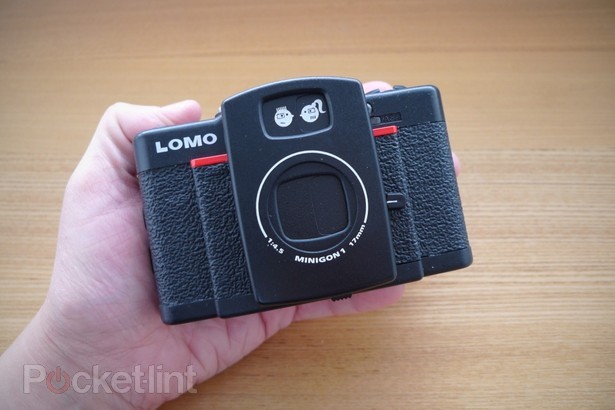
Lomography LC-WideAnalogue camera specialist Lomography recently expanded its classic LC-A lineup when it unveiled the LC-Wide, featuring a new wide angle lens and a choice of picture formats. The original LC-A was first manufactured 27 years ago and was then replaced by the LC-A+ in 2006. Packing a considerable heritage, the LC-Wide may be the most modern snapper to join the lineup, but how does it compare to the LC-A+ and is it worth trading up?

Measuring in at 108 x 68 x 44.5mm, the LC-Wide is pretty much the same size as its older sibling and feels just as sturdy in the hand. It tips the scales at 220g (not including the battery and film) which is more or less the same as the LC-A+. Although a fair bit larger than most modern digital cameras, the pleasingly chunky chassis is palm-sized so it won’t take up to too much room in your bag and its relative bulk actually means that it can be held far more comforably than many smaller cameras. The textured finish also means that there’s plenty of grip to keep it slipping from your hand and it also comes with a detachable wrist strip for extra safety.

In terms of looks, it boasts the same vintage asthetics as previous LC-A models with a few added touches to make it clear that this is an upgrade. The lens casing on the front of the camera is slightly wider to accomodate the new wide-angle 17mm lens, and the extra protrusion sports a thin red trim. Apart from these differences and a couple of very minor aesthetic additions (such as the text around the lens) the camera looks more or less the same as the LC-A+.

You can read the rest of the article here on Pocket-lint.com (originally published 21/06/11).

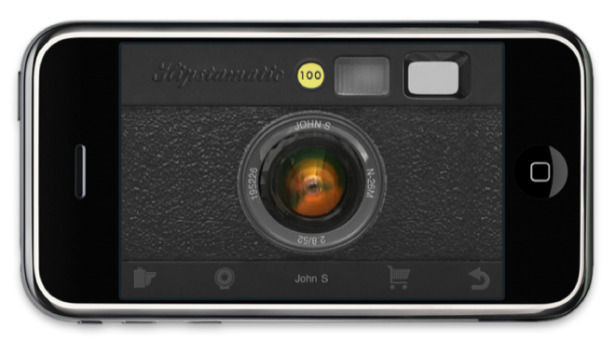
Hipstamatic – behind the lens

Hipstamatic iPhone appHere’s a feature that I wrote for Pocket-lint.com on the popular Hipstamatic iPhone app. My comments on the viral marketing aspect of the app are referenced on its Wikipedia page.

Do people want photographic prints anymore? Prints are expensive, they fade and all they do is create heavy boxes to carry from home to home throughout our lives when they’re not gathering dust in the attic. Prints are old. So, does anyone care anymore?

“We do”, says Mario Estrada, community director of Hipstamatic, “they’re awesome to shuffle through. I remember being a kid and pouring through my parents shoe box of old prints and I miss that. I want that experience. I don’t want to be old and have to redirect my grandchildren to Facebook to look at my pictures”.

It’s a point that hits undeniable warm notes of nostalgia – one that’s hard to argue with when it’s the very same feeling that’s made Hipstamatic one of the most downloaded apps for iPhone – 1.4 million mobile users worldwide and counting. In the same way that cult brand Lomography is enjoying success with its analogue, film-based snappers, Hipstamatic is getting the same effect in digital form, but the latest move to introduce the HipstaMart Print Lab service – offering genuine, old-school prints made from your mobile camera shots – brings the whole ethos full circle. So, where did the idea of this low grade retro look digital camera application come from in the first place? Estrada explains:

“We heard a story about a plastic camera that once existed and we liked it”.

You can read the rest of the article here on Pocket-lint.com (originally published 16/11/10).

Music streaming subscriptions are the way forward, says Featured Artists Coalition

Mark Kelly Featured Artists CoalitionHere’s a exclusive interview that I did for Pocket-lint.com with FAC CEO and Marillion keyboardist Mark Kelly.

Spotify recently announced that its free music streaming service wouldn’t be quite so free anymore, with subscription-free listening now reduced from 20 hours to 10. While there might be a groan from those who signed up for the service all that time ago, what exactly does it mean for the musicians behind the tracks?

The music industry is a complicated beast, so we had a chat with Featured Artists Coalition CEO, Mark Kelly (pictured right with Marillion band mate Steve Hogarth) to shed some light on the subject. He told us:

“It’s a difficult one to judge. I can understand why Spotify is doing what it’s doing and why it’s doing it as there’s a lot of pressure on the brand as it’s trying to get into the US market. Our main criticism of Spotify is the deals that it’s made with the labels under Non-Disclosure Agreements (NDA). That means that the artists have no idea what the details of the agreements are but we very much doubt that the labels will be sharing all the money that they make off the back of them with the musicians that provide the content in the first place.”

The advent of downloading and streaming music has changed the face of the music industry forever, often at a cost to the people that actually produce the sounds. The way that the business runs has failed to keep pace with technological change. In the wake of reduced royalties and illegal downloads, the Featured Artist Coalition (FAC) was set up to campaign for the protection of UK performers’ and musicians’ rights.

You can read the rest of the article here on Pocket-lint.com (originally published 27/04/11).

Moshi Monsters gadgets in the pipeline

Michael Acton SmithHere’s an exclusive interview that I did for Pocket-lint.com with Firebox co-founder, Mind Candy CEO and all-round web entrepreneur Michael Acton Smith.

It’s been described as “Facebook for kids”, has a sign-up rate of one person every second and features cute characters such as Squidge, Doris and Lady Goo Goo, but what exactly is Moshi Monsters and how did it get to be so big? He’s a busy man, but Pocket-lint managed to track down Mr Moshi himself, CEO and founder of parent company Mind Candy, Michael Acton Smith, for a chinwag at his fancy new office in London’s hipster central, Shoreditch.

When someone turns up to an interview carrying not one, but two cans of Red Bull in their hand you can be fairly sure that it’s going to be an energetic chat and we weren’t disappointed by Acton Smith’s passion and enthusiasm for the Moshi Monsters brand.

“There are many different ways of describing Moshi Monsters. I’ve used the phrase ‘Facebook for children’ in the past. By that, we don’t mean that we want kids to be uploading their party photos or talking about where they are. We wanted to create an online experience that allows them to do the things they want to do, all on one location.

“They can do puzzles, upload art, chat to their friends, send virtual gifts, in the way that adults can do all the things they love doing online in one space as well. However, where Moshi differs from many other social networks is that we don’t allow any personally identifiable information and all users have a username, rather than using their actual name.”

The online Moshi world has a wide-ranging audience, from parents to toddlers, but the core market is aged 7-10. Launched in 2008, Moshi Monsters is essentially a social network for children – an online world where they can adopt one of six different types of monster, including Zommers (zombie monsters), Luvlis (heart-shaped, flying critters) and Furis (gorilla-like creatures). These can then be customised and named (Acton Smith’s own monster is called Snowcrash) and looked after, a little like a Tamagotchi. Players can also add pets or ‘moshlings’ to their monster’s house choosing from characters such as Plinky, Ecto and Big Bad Bill.

You can read the rest of the article here on Pocket-lint.com (originally published 19/04/11).

3D better than 2D, says your brain

Libby in Mindlab testing gearHere’s an exclusive feature that I wrote for Pocket-lint.com when the Blu-ray Disc Association invited me to take part in some Mindlab testing.

People are 12 per cent more attentive when watching Blu-ray 3D compared to a conventional Blu-ray disc and 29 per cent more attentive when that same 3D experience is up against a plain old DVD. So says recent research commissioned by the Blu-ray Disc Association (BDA). The results of the study, which is good news for 3D evangelists, also showed that people are 7 per cent more engaged when watching Blu-rays in 3D as well.

But how were these results collected and just how believable are they? Pocket-lint was invited to take an exclusive peek at the testing procedure and also to take part. Read on to find out what happened.

The tests were carried out by the Mindlab International team, based at the Sussex Innovation Centre in Brighton which is essentially an incubation home for tech companies. Mindlab is a neuromarketing company founded by company chairman, director of research and “father of neuromarketing” Dr David Lewis-Hodgson in the early 90s, under the slightly alarming title of StressWatch. Thankfully in 2005, the name was changed to the infinitely more friendly sounding MindLab.

On arrival at Mindlab HQ, we had the whole test process explained to us by Mindlab’s MD and director of operations, Duncan Smith, and his friendly team of data analysts and researchers. The technology used by Mindlab may look like something out of a science-fiction film, but it’s actually called EEG testing (or electroencephalography to give it its full title) which provides quantifiable data on brain activity that’s combined with EDA (electro-derman activity) readings taken from small electrodes on the hand which measure stress indicators such as sweat. The point behind all this is to understand responses to subconscious influences, in this case a selection of film clips.

You can read the rest of the article here on Pocket-lint.com (originally published 28/03/11).

Lomography – the return of analogue

Lomography interviewHere’s an exclusive interview that I did for Pocket-lint.com on the return to analogue photography, featuring Lomography’s online manager for the UK, Heidi Mace.

What do Hollywood actor Elijah Wood, recently disbanded US rock group The White Stripes and English sci-fi author Neil Gaiman have in common? Give up? The answer is that they’re all fans of cult analogue photography brand Lomography (or Lomo to its friends).

Famous for cameras such as the Diana and the LC-A, Lomo is popular with both young hipsters and older fans who prefer the good old days before digital photography came along and completely changed the way we take pictures. But, in this age of technical know-how, why is analogue photography so popular again? We settled down for a chat with Lomography UK’s online manager, Heidi Mace, at the company’s central London gallery store in order to shed some more light on the subject.

“It has a lot to do with people growing a bit tired with their digtial cameras. Even though digital is obviously a great innovation that has revolutionized photography, people get bored of them because they know what they’ve got before they’ve even upoaded them. People love the fact you never quite know what you’ve taken until you get your Lomo pictures back. You get more interesting results and so you feel like you’re achieving something.

“The cameras are pretty simplistic in a way, but that gives you a lot of artistic licence. You can do lots of different things, without spending lots of money or having to understand aperture settings etc. When I first started using lomo cameras, I didn’t have a clue what any of that was, but I still managed to find a way of taking photos without having to worry about getting all of the technical settings right.”

You can read the rest of the article here on Pocket-lint.com (originally published 03/03/11).

Lomography Sprocket Rocket review

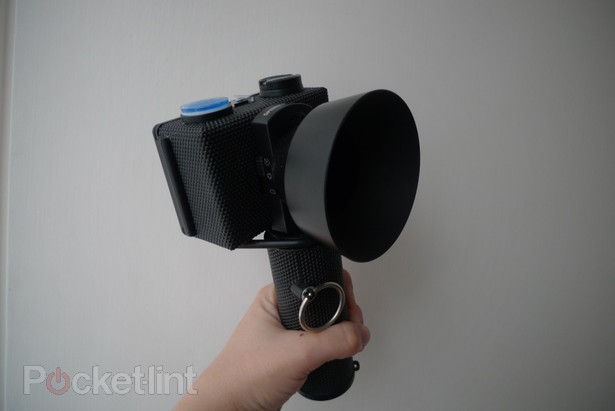
Lomography Sprocket RocketAnalogue camera maker Lomography (or Lomo, to those in the know) has been driving the public’s desire for retro cameras for a while now. Following on from the sucess of its first product (the LC-A+) and it’s popular Diana F+ and Diana Mini models, the brand has introduced the Sprocket Rocket.

The latest addition to Lomo’s fast-expanding lineup of analogue snappers, the new model uses an extra-wide lens to capture panoramic shots and, as the name suggests, the camera uses the full size of the film including the sprocket holes and numbering at the edge. The additon of a rewind dial makes it possible for you to wind the film backwards as well as forwards between frames in order to get some really interesting effects. We recently reviewed the Lomo 360 Spinner – a 360-degree panoramic camera. While it’s a great piece of kit, it is slightly bulky and cumbersome, while the newer Sprocket Rocket offers panoramic pictures (albeit not full 360-degrees) in a much more compact product.

Some models in the Lomo range use 120mm film that’s notoriously hard to track down, unless you’re lucky enough to live near one of the Lomo stores. Thankfully, the Sprocket Rocket uses conventional 35mm variety that can be picked up easily from anywhere that sells camera film, such as the chemist. If you’re used to the simplicity of popping an SD card into your digital camera, then the idea of loading a film might sound mildly scary, not to mention ridiculously old-fashioned. Rest assured that getting your film in place is absolute child’s play on the Sprocket Rocket. All you need to do is remove the back door of the camera, lift the winding knob, pop the film in, attach to the take-up spool on the right and wind on slightly to make sure it’s firmly attached. If you follow the enclosed instructions, then you really can’t go wrong.

The camera itself is a thing of beauty, with its stylish black finish and 1940s styling, its looks like something out of a spy film or a Dick Tracy comic. Although predominantly plastic, the camera’s chassis is reassuringly sturdy, and certainly more robust that some of the brand’s cheaper models such as the Diana Mini.

You can read the rest of the article here on Pocket-lint.com (originally published 29/12/10).

Lomography Spinner 360 review

Lomography Spinner 360Analogue camera brand Lomography (or Lomo, for short) has fast been gaining popularity following the success of its first model – the Lomo LC-A+ – and subsequent Diana F+ and Diana Mini models, while the London shop has just celebrated its first anniversary. The Spinner 360 is the most recent addition to the brand’s arsenal of retro-styled cameras and, as the name suggests, is designed to take 360-degree panoramic images.

Unlike some models in the company’s range, which use relatively hard-to-find 120mm film, the Spinner uses conventional 35mm film that you can buy anywhere. For those of us that are used to digital snaps, loading camera film can seem slightly intimidating, but rest assured that the Spinner makes it absolutely child’s play. You simply pop the back open, lift up the rewind dial, put the film in, attach the spool to the sprocket and wind it a couple of times using the dial on the bottom.

Before shooting, you need to make sure that the aperture is switched to either the “cloudy” or “sunny” setting (depending how light the shooting conditions are). If you’re outside in the sun and using ISO 400 film then use the sunny setting, or if it’s cloudy then, yep, you’ve guessed it – use the cloudy setting. If you’re using ISO 100 or 200 or if you’re shooting inside (it’ll need to be a brightly lit room) then always use the cloudy setting. If you leave it on the rewind setting then you’ll end up with a blank roll of film and all of your photographic efforts will have been wasted.

There is a hotshoe on top of the camera but as there are no contact points, you won’t be able to use a conventional flash, but you can use a strobe flash or constant light source.

There’s a cool-looking 360-degree spirit level on top of the camera, featuring an image of a jumping dolphin (a Spinner is a type of Dolphin, if you hadn’t worked out the connection). This will help to you to line up your shot so that you get a complete panorama. The trick is to keep the camera steady, which may take a little bit of practice as the motion of pulling the cord out tends to jog the whole unit unless you’re careful. Or if you prefer, you can go off-piste and hold the camera at an angle if you want to experiment with your photos. Alternatively, if you want to guarantee a non-shaky picture, there’s a standard tripod mount on the base of the camera handle.

You can read the rest of the article here on Pocket-lint.com (originally published 05/10/10).