3D better than 2D, says your brain

Libby in Mindlab testing gearHere’s an exclusive feature that I wrote for Pocket-lint.com when the Blu-ray Disc Association invited me to take part in some Mindlab testing.

People are 12 per cent more attentive when watching Blu-ray 3D compared to a conventional Blu-ray disc and 29 per cent more attentive when that same 3D experience is up against a plain old DVD. So says recent research commissioned by the Blu-ray Disc Association (BDA). The results of the study, which is good news for 3D evangelists, also showed that people are 7 per cent more engaged when watching Blu-rays in 3D as well.

But how were these results collected and just how believable are they? Pocket-lint was invited to take an exclusive peek at the testing procedure and also to take part. Read on to find out what happened.

The tests were carried out by the Mindlab International team, based at the Sussex Innovation Centre in Brighton which is essentially an incubation home for tech companies. Mindlab is a neuromarketing company founded by company chairman, director of research and “father of neuromarketing” Dr David Lewis-Hodgson in the early 90s, under the slightly alarming title of StressWatch. Thankfully in 2005, the name was changed to the infinitely more friendly sounding MindLab.

On arrival at Mindlab HQ, we had the whole test process explained to us by Mindlab’s MD and director of operations, Duncan Smith, and his friendly team of data analysts and researchers. The technology used by Mindlab may look like something out of a science-fiction film, but it’s actually called EEG testing (or electroencephalography to give it its full title) which provides quantifiable data on brain activity that’s combined with EDA (electro-derman activity) readings taken from small electrodes on the hand which measure stress indicators such as sweat. The point behind all this is to understand responses to subconscious influences, in this case a selection of film clips.


You can read the rest of the article here on Pocket-lint.com (originally published 28/03/11).

Lomography – the return of analogue

Lomography interviewHere’s an exclusive interview that I did for Pocket-lint.com on the return to analogue photography, featuring Lomography’s online manager for the UK, Heidi Mace.

What do Hollywood actor Elijah Wood, recently disbanded US rock group The White Stripes and English sci-fi author Neil Gaiman have in common? Give up? The answer is that they’re all fans of cult analogue photography brand Lomography (or Lomo to its friends).

Famous for cameras such as the Diana and the LC-A, Lomo is popular with both young hipsters and older fans who prefer the good old days before digital photography came along and completely changed the way we take pictures. But, in this age of technical know-how, why is analogue photography so popular again? We settled down for a chat with Lomography UK’s online manager, Heidi Mace, at the company’s central London gallery store in order to shed some more light on the subject.

“It has a lot to do with people growing a bit tired with their digtial cameras. Even though digital is obviously a great innovation that has revolutionized photography, people get bored of them because they know what they’ve got before they’ve even upoaded them. People love the fact you never quite know what you’ve taken until you get your Lomo pictures back. You get more interesting results and so you feel like you’re achieving something.

“The cameras are pretty simplistic in a way, but that gives you a lot of artistic licence. You can do lots of different things, without spending lots of money or having to understand aperture settings etc. When I first started using lomo cameras, I didn’t have a clue what any of that was, but I still managed to find a way of taking photos without having to worry about getting all of the technical settings right.”

You can read the rest of the article here on Pocket-lint.com (originally published 03/03/11).

Lomography Sprocket Rocket review

Lomography Sprocket RocketAnalogue camera maker Lomography (or Lomo, to those in the know) has been driving the public’s desire for retro cameras for a while now. Following on from the sucess of its first product (the LC-A+) and it’s popular Diana F+ and Diana Mini models, the brand has introduced the Sprocket Rocket.

The latest addition to Lomo’s fast-expanding lineup of analogue snappers, the new model uses an extra-wide lens to capture panoramic shots and, as the name suggests, the camera uses the full size of the film including the sprocket holes and numbering at the edge. The additon of a rewind dial makes it possible for you to wind the film backwards as well as forwards between frames in order to get some really interesting effects. We recently reviewed the Lomo 360 Spinner – a 360-degree panoramic camera. While it’s a great piece of kit, it is slightly bulky and cumbersome, while the newer Sprocket Rocket offers panoramic pictures (albeit not full 360-degrees) in a much more compact product.

Some models in the Lomo range use 120mm film that’s notoriously hard to track down, unless you’re lucky enough to live near one of the Lomo stores. Thankfully, the Sprocket Rocket uses conventional 35mm variety that can be picked up easily from anywhere that sells camera film, such as the chemist. If you’re used to the simplicity of popping an SD card into your digital camera, then the idea of loading a film might sound mildly scary, not to mention ridiculously old-fashioned. Rest assured that getting your film in place is absolute child’s play on the Sprocket Rocket. All you need to do is remove the back door of the camera, lift the winding knob, pop the film in, attach to the take-up spool on the right and wind on slightly to make sure it’s firmly attached. If you follow the enclosed instructions, then you really can’t go wrong.

The camera itself is a thing of beauty, with its stylish black finish and 1940s styling, its looks like something out of a spy film or a Dick Tracy comic. Although predominantly plastic, the camera’s chassis is reassuringly sturdy, and certainly more robust that some of the brand’s cheaper models such as the Diana Mini.

You can read the rest of the article here on Pocket-lint.com (originally published 29/12/10).

Top 13 horror films on Blu-ray

Best 13 horror films on Blu-rayThis is a seasonal Blu-ray round-up that I wrote for Pocket-lint.com.

If you hadn’t already realised, it’s Halloween on 31 October, making this the perfect season for getting re-acquainted with the best horror films ever made. We’ve hunted down the top 13 horror films available on Blu-ray for your viewing pleasure. Of course, to get the best out of the spooky tales, you really need to see them in high definition. Not only will the picture be more defined, but Blu-ray’s excellent performance on dark scenes means that you won’t er, be left in the dark when it comes to the nocturnal nuances that actually make up the vast majority of these films. Grab yourself some popcorn, a slice of pumpkin pie and sit back and prepare to be scared…

Halloween

FIRST RELEASED:
1978
PRICE:
£5.49
FEAR FACTOR:
10/10

John Carpenter’s 1970s cult classic is a masterclass in how to make a really terrifying film on a shoestring budget. Set in the fictional suburban town of Haddonfield, Illinois, the film begins with 6-year old Michael Myres brutally murdering his older sister on Halloween night. Fast forward 15 years and the grown-up Myres escapes from a psychiatric hospital and returns to the town to terrorise teenager Laurie Strode (Jamie Lee Curtis) and her pals. The only person with any hope of stopping his killing spree is his psychiatrist Dr Sam Loomis (Donald Pleasence).

The film is packed with carefully paced set pieces that have you jumping out of your skin at regular intervals, while the haunting score, penned by the director himself, will also keep you on the edge of your seat. As the knife-happy Myres spends much of the time lurking in the shadows, this is a good one to watch on Blu-ray as the details in even the darkest scenes won’t descend into inky blackness. This is horror cinema at its best, but we would advise you to avoid the 2007 remake like the plague.

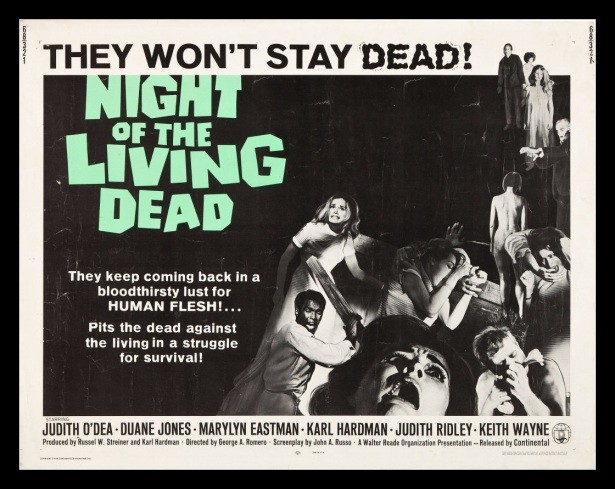
Night of the living dead

FIRST RELEASED:
1968
PRICE:
£6.99
FEAR FACTOR:
8/10

This independent film from the late 60s was also made on a tiny budget, but that didn’t stop it cementing director George A. Romero’s reputation as a horror movie legend. The film tells the story of a bunch of survivors who hole up in a remote farmhouse to try and escape the horde of flesh-eating zombies outside. Shot in black and white, the film manages to get away with a fair bit of visceral gore that probably would’ve looked a bit over the top in colour. The Blu-ray treatment has certainly worked wonders with the film, adding a distinct sharpness to the ageing monochrome visuals.

As well as being applauded as being one of the first mainstream films to star an African-Amercian actor as the lead character, the film is also famously said to be an allegory of 1960s America, referencing Vietnam, Cold War politics and the civil rights movement. Crikey. And there you were thinking it was all just about a load of zombies…

You can read the rest of the article here on Pocket-lint.com (originally published 28/10/10).

Lomography Spinner 360 review

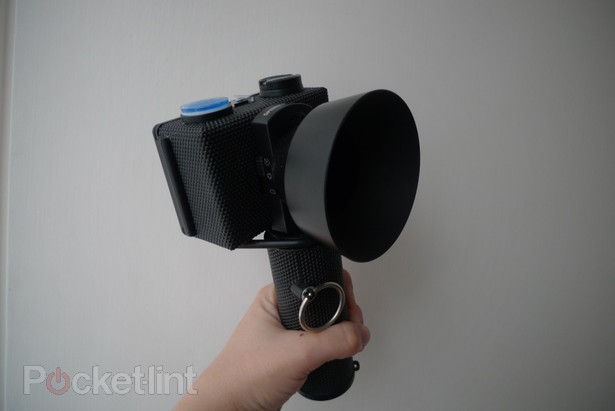
Lomography Spinner 360Analogue camera brand Lomography (or Lomo, for short) has fast been gaining popularity following the success of its first model – the Lomo LC-A+ – and subsequent Diana F+ and Diana Mini models, while the London shop has just celebrated its first anniversary. The Spinner 360 is the most recent addition to the brand’s arsenal of retro-styled cameras and, as the name suggests, is designed to take 360-degree panoramic images.

Unlike some models in the company’s range, which use relatively hard-to-find 120mm film, the Spinner uses conventional 35mm film that you can buy anywhere. For those of us that are used to digital snaps, loading camera film can seem slightly intimidating, but rest assured that the Spinner makes it absolutely child’s play. You simply pop the back open, lift up the rewind dial, put the film in, attach the spool to the sprocket and wind it a couple of times using the dial on the bottom.

Before shooting, you need to make sure that the aperture is switched to either the “cloudy” or “sunny” setting (depending how light the shooting conditions are). If you’re outside in the sun and using ISO 400 film then use the sunny setting, or if it’s cloudy then, yep, you’ve guessed it – use the cloudy setting. If you’re using ISO 100 or 200 or if you’re shooting inside (it’ll need to be a brightly lit room) then always use the cloudy setting. If you leave it on the rewind setting then you’ll end up with a blank roll of film and all of your photographic efforts will have been wasted.

There is a hotshoe on top of the camera but as there are no contact points, you won’t be able to use a conventional flash, but you can use a strobe flash or constant light source.

There’s a cool-looking 360-degree spirit level on top of the camera, featuring an image of a jumping dolphin (a Spinner is a type of Dolphin, if you hadn’t worked out the connection). This will help to you to line up your shot so that you get a complete panorama. The trick is to keep the camera steady, which may take a little bit of practice as the motion of pulling the cord out tends to jog the whole unit unless you’re careful. Or if you prefer, you can go off-piste and hold the camera at an angle if you want to experiment with your photos. Alternatively, if you want to guarantee a non-shaky picture, there’s a standard tripod mount on the base of the camera handle.

You can read the rest of the article here on Pocket-lint.com (originally published 05/10/10).