Wearables in space

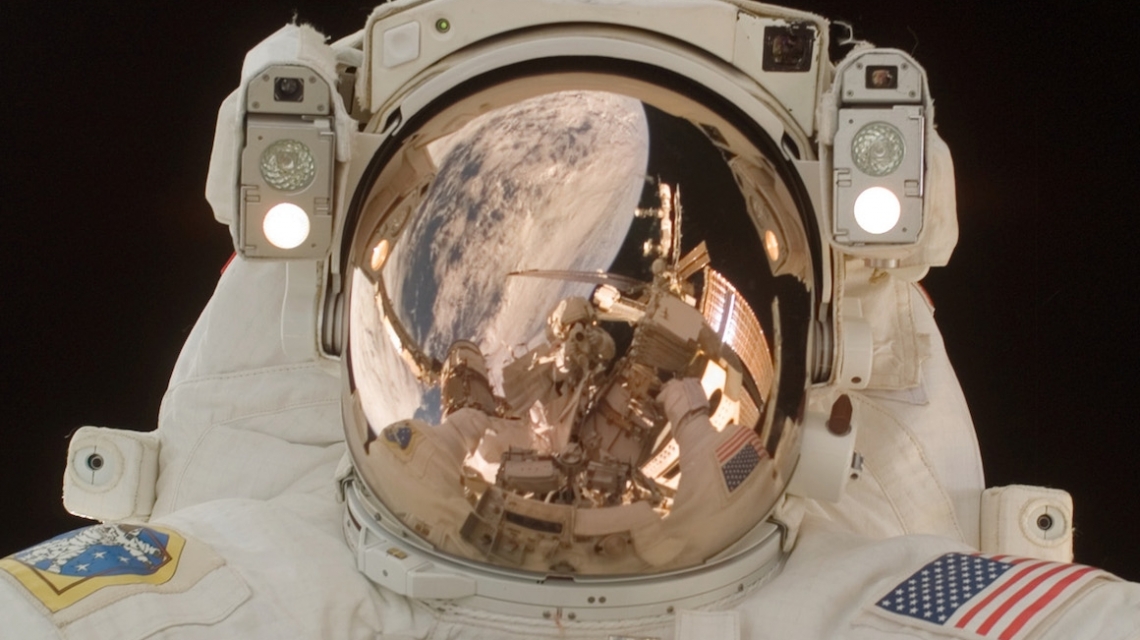
Space selfie by Japanese astronaut Akihiko Hoshide

Space selfie by Japanese astronaut Akihiko Hoshide

From the famous Mercury Seven astronauts to the spacemen and women on the ISS, what these pioneers wear is absolutely critical when it comes to coping with life at Zero-G.

Much of the technology that Nasa develops for space flight eventually makes it into the products that we all use here on Earth, but what about wearables in space? We’ve pulled together some of the space-aged kit that astronauts wear in space and a few things they might wear in future…

Space watch

timex-datalink-1411757481-HsMx-column-width-inline

While the first watch to make it into space was a Sturmanskie, worn by cosmonaut Yuri Gagarin, the official watch of the Apollo moon landings was the Omega Speedmaster. But it was the Timex Datalink that was arguably the first smartwatch in space as it was also the very first watch capable of downloading information from a computer.

Made in conjunction with Microsoft, the watch has been approved by Nasa for space travel and has been worn by many astronauts since, but the Speedmaster remains the only watch certified for spacewalks.

Health monitoring
google-glass-1411757529-05z3-column-width-inline

Wearable health monitors have been a big part of human spaceflight from the start, with all of the Mercury, Gemini and Apollo astronauts wearing biosensors ranging from a belt-like harness to a full biosuit comprising heart rate, body temperature and blood pressure monitors.

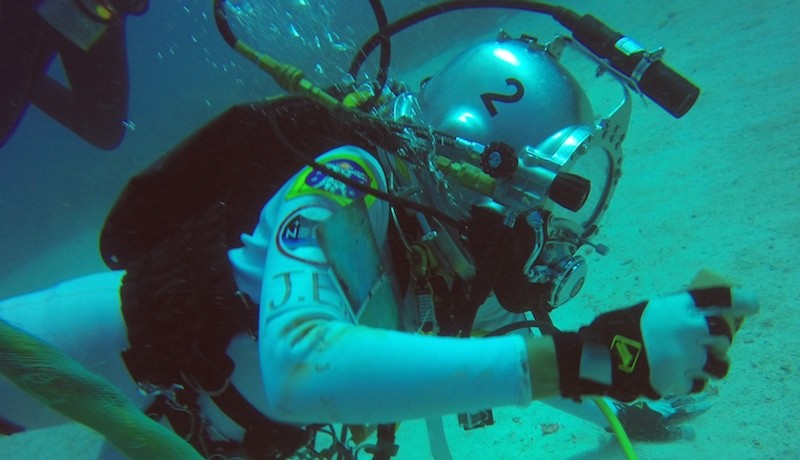
Nasa recently tested out Google Glass and Bluetooth heart rate monitors during simulated space walks on its Neemo (Nasa Extreme Environment Mission Operations) underwater facility for potential use on the ISS in future.

GoPro

Space selfie by Japanese astronaut Akihiko Hoshide

Space selfie by Japanese astronaut Akihiko Hoshide

Action cam specialist GoPro was named ‘official on-board camera of Nasa’ in 2011. Used by astronauts on the International Space Station (ISS), and famously by Felix Baumgartner in his epic space jump, the brand’s Hero 3 is compatible with a huge selection of mounts, ideal for keeping the action steady in zero gravity.

This spectacular selfie was above was snapped outside the ISS by Japanese astronaut Akihiko Hoshide…

You can read the rest of the article at Wareable (originally published 28 September 2014).

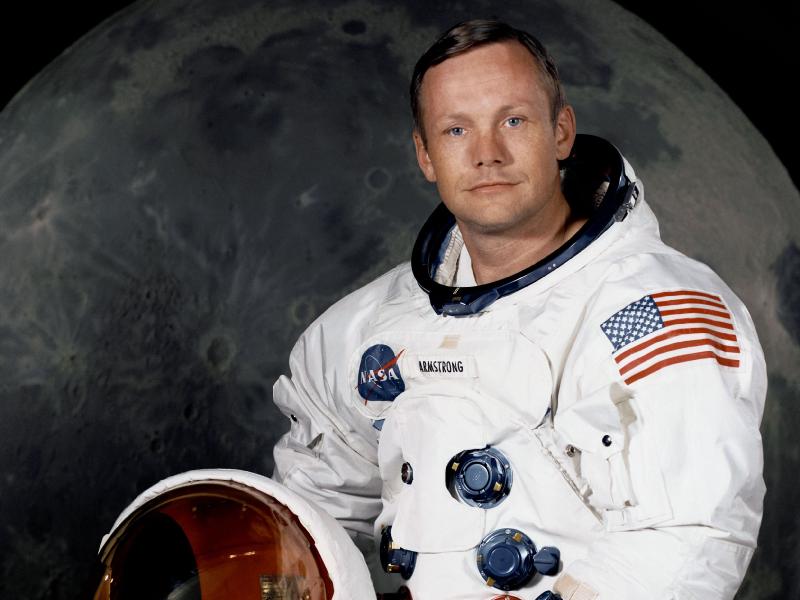
Neil Armstrong 1930-2012

Neil ArmstrongWhen I heard the sad news of Neil Armsrong’s death via NBC‘s Twitter feed, it really hit home that the only generation to have walked on the moon won’t be with us forever.

Many of the elite Apollo astronauts, including first American in space Alan Shephard, have already departed and only two of the Mercury Seven – immortalised in the 1983 biopic The Right Stuff – survive (although John Glenn continues to bat a cracking innings at the age of 91 and even managed to get into the record books as the oldest person in space when he flew on the space shuttle at the age of 77, as well as being the only individual to fly in both the Mercury and shuttle programmes. What a life!).

Even relative youngster and first American woman in space Sally Ride passed away a short time ago. Sad times indeed.

If we ignore the crackpot conspiracy theorists who claim that it was all an elaborate hoax (as, thankfully, the scientific world does), the moon landing in 1969 can be considered one of the most significant moments in 20th century history.

It’s safe to say that I’m a bit of a space nerd. I own mission patches from all of the Apollo flights, my favourite mug is emblazoned with Apollo 13 flight director Gene Kranz’s memorable book title “Failure is Not an Option” and I got up at 6am on a Monday morning a few weeks back to witness the Mars Curiosity rover touching down on the Red Planet.

Neil ArmstrongI recently visited the the National Air and Space Museum in Washington, D.C. where I got the chance to see the Apollo 11 command module as well as a huge selection of artefacts from the mission including spacesuits, and the Hasselblad camera used by Michael Collins to take photos of the lunar module.

In short, I would’ve loved to have been around to witness such an important moment in the history of science and exploration – my mum has always talked fondly of staying up until the small hours to watch the moon landing with my gran.

Although most well-known for his history-making role as Commander of the Apollo 11 mission and being the first human being to set foot on the moon, making him the first of only 12 men to do so, Armstrong also flew in Nasa’s previous programme, as Command Pilot of the Gemini 8, making him one of an elite band of astronauts to have flown in more than one space programme.

Second man on the moon Buzz Aldrin paid tribute to Armstong, saying:

“My friend Neil took the small step but giant leap that changed the world and will forever be remembered as a landmark moment in human history.

“I had truly hoped that in 2019, we would be standing together along with our colleague Mike Collins to commemorate the 50th Anniversary of our moon landing. Regrettably, this is not to be. Neil will most certainly be there with us in spirit”.

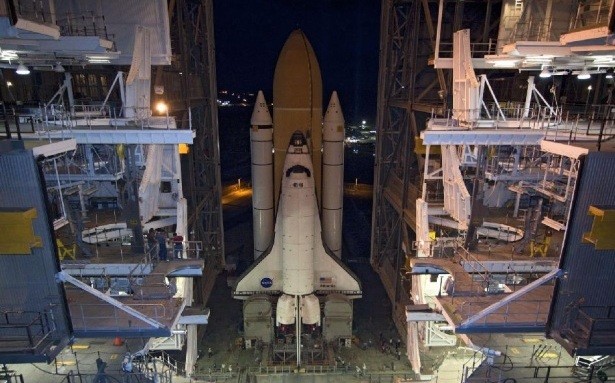
Neil ArmstrongLast year I wrote about the the end of the Space Shuttle programme, which was canned after 30 years to make way for the Constellation programme, in which the Americans were set to go back to non-reusable spacecraft.

Following the NASA Authorization Act 2010, this plan was ditched with Nasa not expected to launch its own spaceflights again until at least 2016. In the meantime, American astronauts will be hitching rides to the International Space Station with the Russians, for the measly sum of around $63 million per seat.

We can only hope that Nasa picks up where it left off in terms of manned spaceflight. Yes, it’s expensive, and yes, it’s dangerous, but in the spirit of human endeavour, it would be a crime not to invest in further exploration.

While the future of spaceflight appears hesitant, one thing’s for certain – whatever “the right stuff” is, Armstrong had it.

Images: Nasa

Space shuttle: the ultimate gadget – 30 years of service

Space shuttle final launchHere’s a feature that I wrote for Pocket-lint.com on the history of the space shuttle to coincide with the final mission.

Despite lifting off 135 times, making an appearance in a Bond film, and even its immortalisation in Lego, the famous space shuttle is taking early retirement. On 8 July 2011, the Atlantis orbiter will embark on the very last space shuttle mission bringing NASA’s shuttle programme to an end after 30 years. It’s the end of an era, both for space exploration and for technology, so it seems only fitting to look back over the life and times of the space shuttle, the amazing gadgets and gizmos that make her go and find out why the programme is coming to an end and what happens next.

Firstly, let’s deal with the basics. What is the space shuttle? Well, it was the first reusable orbital space craft, unlike the old Saturn V rockets as used in the Apollo missions (including the moon landings) that could only be used once. The concept of a spacecraft returning and landing horizontally, like a plane, was born in the 1950s, although development of the space shuttle didn’t actually begin until the 1970s, after the US National Aeronautics and Space Administration (NASA) was given the official go-ahead by president Richard Nixon in 1969.

The very first space shuttle orbiter was named Enterprise and was designed to perform test flights in the Earth’s atmosphere, so it was never actually ready for spaceflight. Construction began in 1974 and it first took to the sky in 1977. Supposedly, the shuttle was originally going to be called Constitution but was re-named following a campaign by Star Trek fans who thought that it should be named after the Starship Enterprise. Serving US president Gerald Ford said that he was “partial to the name”, but that may have had more to do with the fact that he spent much of his WWII naval service on aircraft carrier USS Monterey, which served with the famous USS Enterprise, the most decorated warship in the conflict. However, adding some weight to the sci-fi story, or at least making full use of the publicity that it generated, Star Trek creator Gene Roddenberry and a fair number of the cast were present at Enterprise’s dedicaton ceremony.

You can read the rest of the article here on Pocket-lint.com (originally published 08/07/11).