Moshi Monsters gadgets in the pipeline

Michael Acton SmithHere’s an exclusive interview that I did for Pocket-lint.com with Firebox co-founder, Mind Candy CEO and all-round web entrepreneur Michael Acton Smith.

It’s been described as “Facebook for kids”, has a sign-up rate of one person every second and features cute characters such as Squidge, Doris and Lady Goo Goo, but what exactly is Moshi Monsters and how did it get to be so big? He’s a busy man, but Pocket-lint managed to track down Mr Moshi himself, CEO and founder of parent company Mind Candy, Michael Acton Smith, for a chinwag at his fancy new office in London’s hipster central, Shoreditch.

When someone turns up to an interview carrying not one, but two cans of Red Bull in their hand you can be fairly sure that it’s going to be an energetic chat and we weren’t disappointed by Acton Smith’s passion and enthusiasm for the Moshi Monsters brand.

“There are many different ways of describing Moshi Monsters. I’ve used the phrase ‘Facebook for children’ in the past. By that, we don’t mean that we want kids to be uploading their party photos or talking about where they are. We wanted to create an online experience that allows them to do the things they want to do, all on one location.

“They can do puzzles, upload art, chat to their friends, send virtual gifts, in the way that adults can do all the things they love doing online in one space as well. However, where Moshi differs from many other social networks is that we don’t allow any personally identifiable information and all users have a username, rather than using their actual name.”

The online Moshi world has a wide-ranging audience, from parents to toddlers, but the core market is aged 7-10. Launched in 2008, Moshi Monsters is essentially a social network for children – an online world where they can adopt one of six different types of monster, including Zommers (zombie monsters), Luvlis (heart-shaped, flying critters) and Furis (gorilla-like creatures). These can then be customised and named (Acton Smith’s own monster is called Snowcrash) and looked after, a little like a Tamagotchi. Players can also add pets or ‘moshlings’ to their monster’s house choosing from characters such as Plinky, Ecto and Big Bad Bill.

You can read the rest of the article here on Pocket-lint.com (originally published 19/04/11).

Cinecittà – Italy’s lengendary film studio

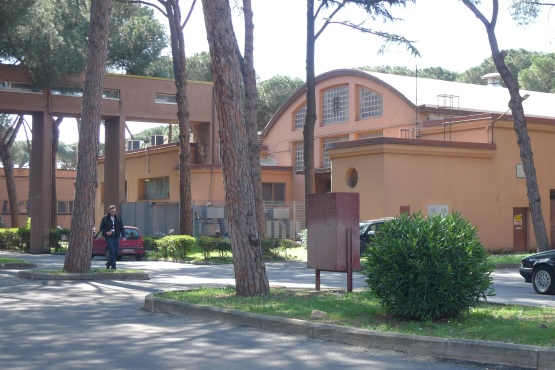
Cinecitta Rome setItalian filmmaker Frederico Fellini once referred to Cinecittà as a “temple of dreams” and it’s not hard to see why.

This legendary film studio was founded in 1937 and has played host to numerous blockbusters, including Ben Hur, Martin Scorsese’s Gangs of New York and Wes Anderson’s The Life Aquatic. The largest film studio in continental Europe, Cinecittà (Italian for Cinema City) has been the filming location for more than 3,000 films over the years including 48 Oscar winners and dozens of ‘spaghetti westerns’. Thanks to the creative talent on offer and relatively cheap production costs, numerous American productions were made at the studio in the 1950s, earning it the nickname “Hollywood on the Tiber”.

Cinecittà film studio

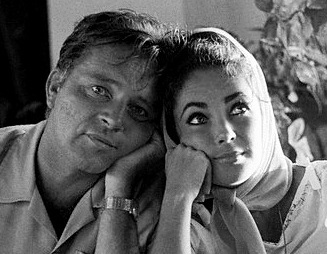
As well as being a beautiful example of modernist architecture, the studio has many claims to fame. Long before Lady Gaga was garbling about Paparazzi, the term was coined at Cinecittà, named after a photographer called Paparazzo from Frederico Fellini’s hugely successful La Dolce Vita. The famous studio is also where Hollywood stars Elizabeth Taylor and Richard Burton began their affair while fiming the extravagant epic Cleopatra.

The studio has survived bombing attacks during World War II as well as a fire in 2007 that resulted in a substantial amount of damage.

I was lucky enough to visit the studios on a recent press trip to the Italian capital, where we had the chance to go boozing at a lavish party on the set of BBC/HBO drama Rome, of which I’m a huge fan. Needless to say, much bubbly was quaffed, many poses were struck and copious amounts of embarrassing photos snapped.

If you’re ever in Rome and looking for something to do that’s a little different, then I highly recommend a visit.

3D better than 2D, says your brain

Libby in Mindlab testing gearHere’s an exclusive feature that I wrote for Pocket-lint.com when the Blu-ray Disc Association invited me to take part in some Mindlab testing.

People are 12 per cent more attentive when watching Blu-ray 3D compared to a conventional Blu-ray disc and 29 per cent more attentive when that same 3D experience is up against a plain old DVD. So says recent research commissioned by the Blu-ray Disc Association (BDA). The results of the study, which is good news for 3D evangelists, also showed that people are 7 per cent more engaged when watching Blu-rays in 3D as well.

But how were these results collected and just how believable are they? Pocket-lint was invited to take an exclusive peek at the testing procedure and also to take part. Read on to find out what happened.

The tests were carried out by the Mindlab International team, based at the Sussex Innovation Centre in Brighton which is essentially an incubation home for tech companies. Mindlab is a neuromarketing company founded by company chairman, director of research and “father of neuromarketing” Dr David Lewis-Hodgson in the early 90s, under the slightly alarming title of StressWatch. Thankfully in 2005, the name was changed to the infinitely more friendly sounding MindLab.

On arrival at Mindlab HQ, we had the whole test process explained to us by Mindlab’s MD and director of operations, Duncan Smith, and his friendly team of data analysts and researchers. The technology used by Mindlab may look like something out of a science-fiction film, but it’s actually called EEG testing (or electroencephalography to give it its full title) which provides quantifiable data on brain activity that’s combined with EDA (electro-derman activity) readings taken from small electrodes on the hand which measure stress indicators such as sweat. The point behind all this is to understand responses to subconscious influences, in this case a selection of film clips.

You can read the rest of the article here on Pocket-lint.com (originally published 28/03/11).

Elizabeth Taylor: 1932-2011

Elizabeth TaylorIt’s almost impossible to write about Dame Elizabeth Taylor without mentioning her oft-quoted love of jewellery and her eight marriages, two of which were to legendary hellraiser Richard Burton. But there was a lot more to her than a propensity for wedding vows and diamonds.

Rising through the ranks from child actress to glamourous starlet and then genuine box office dynamite, Taylor cemented her reputation as a movie icon when she became the very first actress to command a fee of $1 million for her eponymous role in 20th Century Fox’s 1963 epic Cleopatra.

Up until that point, actresses had largely played second fiddle to their male co-stars in terms of billing and cold hard cash. Taylor was the first who had the smarts, and the talent, to compete with the boys. She did, however, remain modest over her trailblazing fee when she quipped: “If someone’s dumb enough to offer me a million dollars to make a picture, I’m certainly not dumb enough to turn it down”.

Taylor won her first Oscar in 1960 for her role as part-time call-girl in BUtterfield 8. However, the award was widely considered to be the result of a sympathy vote following a near-fatal bout of pneumonia – a illness which redeemed her in the eyes of public after she ran off with Eddie Fisher, the husband of American sweetheart Debbie Reynolds. Even Taylor herself acknowledged that the film was one of her worst.

Richard Burton and Elizabeth Taylor

In 1966, she won a much more deserved Oscar for Who’s Afraid of Virginia Woolf? This time she starred as aging lush Martha alongside real-life husband Richard Burton as her long-suffering spouse George in what would prove to be her most critically acclaimed film. The famous couple starred in several other films together, ranging from glamourous star-studded flick The VIPs to the entirely forgettable nonsense that was The Comedians.

As well as making her mark in the world of film, and building a business empire based on perfume and jewellery, Taylor also devoted much of her time to raising awareness of HIV and AIDS, as well as raising a great deal of money for the cause. Following the death of her friend and Giant co-star Rock Hudson from an AIDS-related illness in 1985, she became one of the first major celebrities to talk openly on a subject that had previously been taboo and widely misunderstood.

Elizabeth Taylor AIDS foundationAlways one for taking in waifs and strays, Taylor was a loyal pal to Montgomery Clift and James Dean, both promising young actors who struggled with their sexuality. She was also a vocal, if somewhat misguided, friend to pop superstar Michael Jackson when he was accused of sexually abusing a child in 1993.

As a mouthy dame, Taylor always came across as a significantly more ballsy character than many of her contemporaries such as the doe-eyed Audrey Hepburn, glacial Grace Kelly or tragic Marilyn Monroe and kept up with the times by tweeting under the name @DameElizabeth. Even towards the end, Taylor proved that she still marched to the beat of her own drum by insisting that when she was laid to rest, the service should start 15 minutes later than planned so that she could be late for her own funeral. A classy final act.

The Elizabeth Taylor AIDS Foundation